The leadership of the National Social Security and Insurance Trust (NASSIT) has reaffirmed its commitment to transparency, accountability and responsible leadership, emphasising the importance of a strong working relationship between the institution and the media.
The Director-General of NASSIT, Chernor Mamoud Jalloh, and his Deputy Director-General, Mohamed Orman Bangura, made the commitment during a media cocktail organised for journalists and social media bloggers at the Country Lodge Hotel in Freetown. The engagement provided an opportunity for the institution’s leadership to interact with media practitioners, strengthen professional relationships and encourage constructive dialogue on matters concerning NASSIT’s operations and performance.
Speaking at the gathering, Mr Jalloh described the engagement as an opportunity to foster a lasting partnership with journalists and bloggers, stressing that the relationship between NASSIT and the media should extend beyond formal press conferences and official statements.
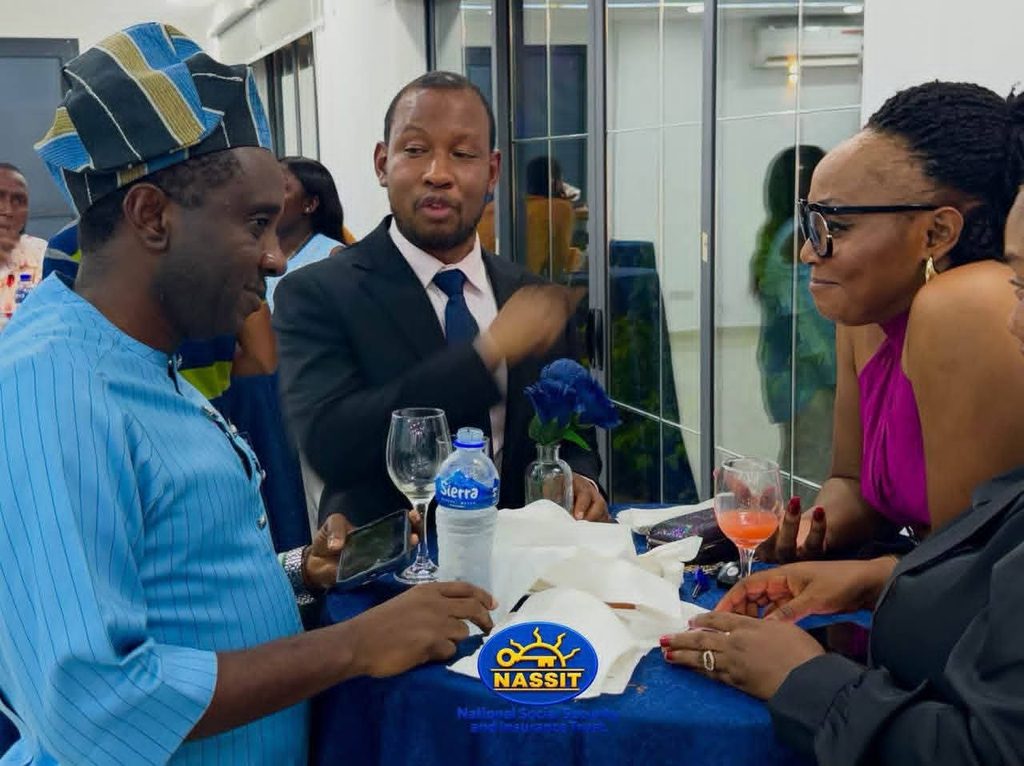
He noted that regular interaction with media practitioners was essential to building mutual understanding, promoting openness and ensuring that the public remained informed about the institution’s activities and responsibilities.
The Director-General encouraged journalists to support efforts aimed at improving NASSIT’s performance while continuing to exercise their professional responsibility to scrutinise the institution’s decisions, policies and management of resources.
He emphasised that supporting an institution’s development should not prevent the media from asking difficult questions or holding its leadership accountable. According to him, constructive engagement between the media and public institutions is necessary for strengthening public confidence and improving institutional performance.
Mr Jalloh also welcomed constructive criticism and differing opinions, explaining that disagreements should not undermine cooperation or prevent stakeholders from working together towards common national objectives.
He maintained that differences in perspective were a normal part of professional engagement and should be approached with mutual respect, understanding and a shared commitment to progress.
Addressing the issue of accountability, the NASSIT Director-General described his position as a serious national responsibility that required dedication, transparency and a willingness to answer questions about his decisions and actions.
“I am accountable. I report what I do, and I am ready to answer any questions,” he stated, assuring journalists of his readiness to engage openly with the media.
His remarks underscored the importance of maintaining an accessible leadership that recognises the media’s role in informing the public and examining the performance of public institutions.
The Director-General further stressed that responsibilities undertaken in the interest of the country should never be treated lightly. He assured participants that he would continue to do his best to fulfil his duties, while relying on the support and cooperation of colleagues, stakeholders and other relevant partners
The engagement also highlighted the need for sustained communication between NASSIT’s management and media practitioners, particularly in promoting public understanding of the institution’s mandate and activities.
As an institution responsible for social security administration, NASSIT operates within a framework where public trust, effective communication and accountability are important to maintaining confidence among contributors, pensioners and other stakeholders.
A constructive relationship with journalists and bloggers can help ensure that information about the institution’s programmes, decisions and service delivery reaches the public accurately and responsibly. At the same time, independent media scrutiny remains essential to promoting transparency and encouraging improvements in institutional governance.
The participation of the Deputy Director-General, Mohamed Orman Bangura, alongside the Director-General, further reflected the institution’s engagement with media stakeholders and the importance of maintaining channels of communication between NASSIT’s leadership and the wider public.
The media cocktail therefore served as a platform for relationship-building, professional interaction and renewed commitment to cooperation between the institution and the media.
Through continued engagement, NASSIT’s leadership has expressed its willingness to encourage open communication, welcome constructive feedback and work with journalists and social media bloggers in ways that support transparency, accountability and institutional progress.