By: Hope Times Staff Writer
The Ministry of Foreign Affairs and International Cooperation has on Thursday, 19th December 2025, conducted a high-level training for its staff on the Government of Sierra Leone’s Individual Performance Appraisal System (IPAS), as part of ongoing efforts to strengthen accountability, transparency, and efficiency within the civil service.
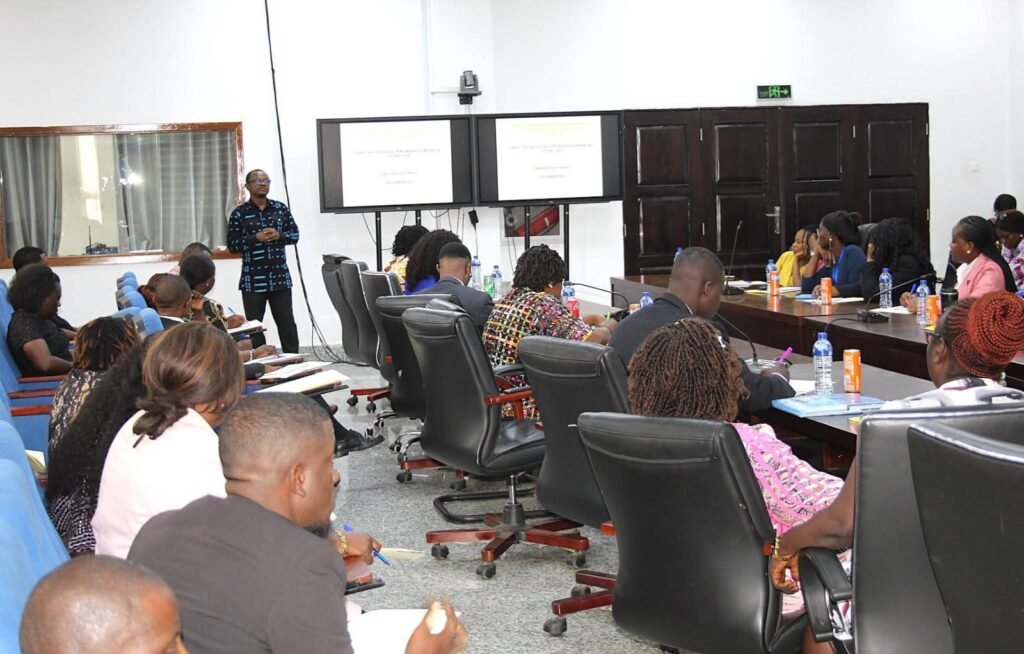
The one-day training workshop, held at the ministry’s conference hall in Freetown, brought together staff from various departments and units. It focused on enhancing participants’ understanding of performance management, particularly the setting of clear, measurable, and job-related targets aligned with ministerial priorities and national development objectives.
Speaking during the session, Franklyn Brima Fawundu, Deputy Director General of Operations at the ministry and a member of the original IPAS design team, traced the evolution of performance appraisal in the civil service. He explained that IPAS was introduced to replace the former Annual Confidential Report (ACR) system, which he described as outdated and heavily dependent on subjective assessment.
“The ACR system placed too much power in the hands of a single evaluator, often without meaningful engagement with the officer being assessed,” Fawundu said. “IPAS represents a shift toward a transparent and interactive process that encourages dialogue, mutual understanding, and objective assessment of performance.”
According to him, the IPAS framework promotes fairness by allowing supervisors and staff to jointly agree on targets and review performance based on evidence, rather than personal discretion.
Echoing similar sentiments, Mose Kamara, Acting Director of Human Resources at the ministry, emphasized that IPAS is a people-centered reform designed to motivate staff while improving institutional performance. He noted that performance appraisal under the new system is not merely an administrative requirement but a strategic tool for professional development and service delivery.
“IPAS helps identify strengths, address weaknesses, and ensure that staff performance contributes meaningfully to the ministry’s mandate,” Kamara stated, adding that consistent and honest performance discussions are key to building a results-oriented public service.
Director of Administration and Finance, Emmanuel Sandi, underscored the pivotal role of the Human Resource Management Office in driving civil service reforms. He described HRMO as the backbone of the public service, noting that career progression is now firmly anchored on continuous training, compliance with established rules, and demonstrated performance.
Sandi explained that the ministry’s annual work plan, which aligns with the broader government agenda, serves as the benchmark for assessing departmental and individual performance. “The success of the ministry is measured against its work plan, and every staff member’s performance contributes directly to achieving those objectives,” he said.
He further reminded participants that IPAS records are central to decisions on promotions, recommendations, and other career opportunities. “What you gain from this training should guide how you work daily, because your IPAS performance will speak for you in the future,” Sandi cautioned.
Providing further insight into the operational implications of IPAS, Joseph S. Odings-Brima, Acting Director at the ministry, outlined the consequences associated with failure to meet agreed performance targets. He explained that under the IPAS framework, poor performance can result in the loss of salary increments, restrictions on leave, and forfeiture of accumulated leave benefits.
“Target-setting must be taken seriously,” Odings-Brima warned. “If targets are not met without valid justification, there are clear professional consequences. Your career progression depends on how well you manage this process.”
The technical session was facilitated by Chernor I. Mansaray, Director of Performance Management at HRMO, who noted that while many institutions have complied procedurally with IPAS requirements, the quality of performance appraisals has often been inadequate.
“Compliance alone is not enough,” Mansaray observed. “The depth and quality of appraisal discussions must improve, and this training is a step in the right direction. I am pleased that the Ministry of Foreign Affairs and International Cooperation is addressing this long-standing gap.”
The training also highlighted the cascading nature of performance management, where individual targets are derived from departmental objectives and aligned with the performance contract signed by the Minister. Facilitators emphasized that this structure ensures coherence across all levels of government and makes individual contributions measurable and accountable.
At the conclusion of the training, officials stressed that mastering the IPAS process is no longer optional but essential for professional relevance and advancement within the civil service. Participants were encouraged to apply the knowledge gained to their daily responsibilities as the ministry continues to position itself as a model of transparency, accountability, and effective public service delivery in Sierra Leone.