By Thaimu T. Kamara
The National Petroleum Regulatory Authority (NPRA) on Wednesday, January 27, 2026, hosted a press briefing at its head office in Freetown to address mounting public concerns over the recent increment in the prices of fuel, kerosene, and diesel across Sierra Leone. The engagement followed the official adjustment of pump prices from Le25 per liter to Le28.5 per liter at all fuel stations nationwide, a development that has sparked widespread debate and anxiety among consumers.
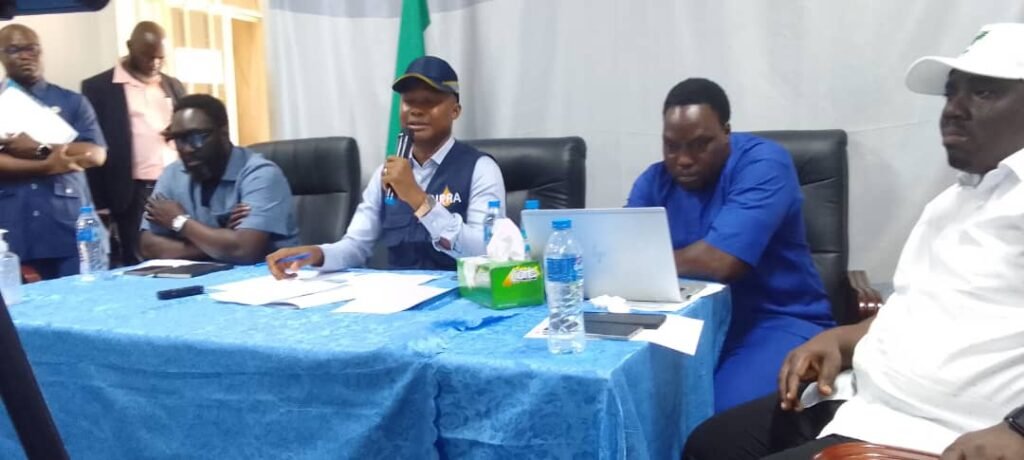
The briefing brought together journalists from a cross-section of media institutions, government stakeholders, and senior officials of the NPRA. The Deputy Director of the Authority formally opened the session, welcoming participants and underscoring the importance of open engagement with the media. In his opening remarks, he introduced the Director General of NPRA, Mr. Koroma, alongside other key stakeholders present, including the Public Relations Officer of the ruling party.
He described the media as an indispensable partner in national development, referring to journalists as the “fourth estate” whose role in informing and educating the public remains critical, especially on sensitive national issues such as fuel pricing. He emphasized that the briefing was convened to ensure that accurate information is disseminated to the public and to clear misconceptions surrounding the recent price adjustments.
In his keynote address, the Director General, Mr. Koroma, outlined the core mandate of the National Petroleum Regulatory Authority. He explained that NPRA exists to protect investors in the petroleum sector, safeguard consumers from unfair practices, and ensure that the state generates appropriate revenue from petroleum-related activities. According to him, these responsibilities must be balanced carefully in a global market that is often volatile and unpredictable.
Mr. Koroma stated that NPRA remains committed to attracting credible investors into Sierra Leone’s petroleum sector while upholding transparency, accountability, and fairness for all consumers. He stressed that regulatory decisions taken by the Authority are guided by both national interest and international market realities, noting that petroleum pricing is influenced by multiple factors beyond local control.
Addressing the role of the media, the Director General urged journalists to uphold professionalism and accuracy in reporting, particularly on economic and policy issues that directly affect the livelihoods of citizens. He described this approach as “development journalism,” calling on media practitioners to contribute constructively to national discourse. In this regard, he referenced Section 12B of the Constitution of Sierra Leone, which emphasizes transparency, accountability, and the protection of consumers and customers.
Mr. Koroma further disclosed that Sierra Leone currently has between nine and ten licensed fuel importers, adding that the process of becoming a fuel importer is stringent and highly regulated. He explained that licensing requirements are designed to ensure reliability, safety, and compliance with international standards. He also noted that Sierra Leone depends largely on imported petroleum products, sourced from countries such as Spain, Togo, and other international markets, making local prices susceptible to global supply chain dynamics.
During the interactive question-and-answer session, journalists raised concerns about the continuous increase in fuel prices and the economic burden it places on ordinary citizens. In response, the Director General acknowledged public frustration and assured journalists that NPRA is actively engaging with the Government of Sierra Leone and fuel importers to explore possible relief measures. He revealed that discussions are ongoing and expressed optimism that there is a strong possibility of a downward adjustment in fuel prices in the near future.
While expressing dissatisfaction with the current inflationary trend in fuel prices, Mr. Koroma clarified that several contributing factors, including global market prices, shipping costs, foreign exchange rates, and international supply conditions, are beyond the direct control of NPRA. Nevertheless, he maintained that the Authority continues to play its regulatory role to minimize the impact on consumers.
He issued a stern warning to fuel dealers and station operators against selling fuel above the officially approved pump prices, stressing that such practices are illegal and will not be tolerated. To this end, he announced that NPRA would soon deploy monitoring and compliance teams across the country to inspect fuel stations and enforce regulations. Stations found violating pricing rules, he warned, will face appropriate sanctions in accordance with the law.
In concluding his remarks, Mr. Koroma noted that while petroleum pricing is regulated in many countries, Sierra Leone is steadily strengthening its regulatory framework to enhance fairness, transparency, and consumer protection within the sector. He reiterated NPRA’s commitment to continuous engagement with stakeholders, particularly the media and the public, to ensure that policies and decisions affecting petroleum products are clearly understood and responsibly implemented.