In a renewed push to strengthen Sierra Leone’s HIV response, the AIDS Healthcare Foundation (AHF) joined forces with the National HIV/AIDS Secretariat and development partners for a strategic media breakfast at the Sierra Palm Hotel, setting the stage for this year’s World AIDS Day observance. The gathering brought together representatives of the UN system, civil society, and health-sector leaders, all aligned in their call for a more energized, data-driven, and community-rooted approach to ending AIDS.
Opening the session, the Director General of the National HIV/AIDS Secretariat, Abdulrahman Sesay, said the ongoing national response continues to weather challenges but remains firmly on course. He described the event as a key step in strengthening collaboration and ensuring open information-sharing among partners particularly the media, which he said plays a central role in shaping public understanding and encouraging preventive behavior.
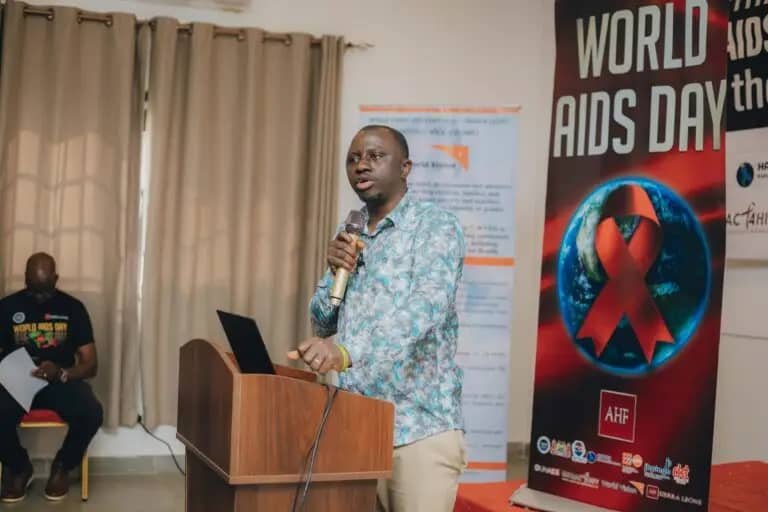
Dr. Sulaiman Lakoh, Director of Disease Prevention and Control at the Ministry of Health, provided the latest picture of Sierra Leone’s HIV landscape. He noted that although the country has made significant progress since the first HIV case was detected in 1987, the virus still affects an estimated 1.7 percent of the population. He highlighted that children account for a significant share of registered infections, while prevalence varies widely across districts, with the Western Rural District showing the highest burden. Dr. Lakoh also pointed to key populations men who have sex with men, female sex workers, and people who inject drugs as groups facing heightened risk and therefore requiring tailored interventions. He said new infections remain worryingly high even as deaths decline due to improved access to treatment.
Representing AHF, Dr. Kate Ssamula reaffirmed the global target of ending AIDS as a public health threat by 2030. She said more than 40,000 people worldwide are newly infected every year, with Africa bearing half that burden. As part of AHF’s contribution, she announced the opening of a new HIV clinic in Waterloo, established in partnership with the government to expand treatment, care, and psychosocial support. Dr. Ssamula urged the media to prioritize responsible reporting, saying accurate storytelling is vital to combating stigma and encouraging people to know their status.
UNFPA Representative Haja Yoroh Bah echoed that view, stressing that the fight against HIV cannot be won without confronting the persistent stigma that discourages testing and treatment. She highlighted UNFPA’s condom pickup stations across the country, describing condoms as one of the most reliable and accessible tools in reducing new infections.
Speaking on behalf of the Network of HIV Positives (NETHIPS), Mary Ahmed described the 2030 goal as both a promise and a responsibility to those living with HIV. She said stigma remains a deep-rooted problem that continues to silence many affected individuals. She called for strengthened partnerships and revitalized community structures, which she said are among the most effective channels for education, support, and grassroots engagement.
Delivering a sobering message, Mariama Dawo from Happy Kids and Adolescent argued that Sierra Leone is not yet on track to eliminate HIV within the next five years. She urged government and donors to ensure test kits are consistently available and warned that reducing funding at this stage would undermine years of progress.
The meeting concluded with a call for more unified action, clearer messaging, and sustained investment elements that participants agreed are essential for Sierra Leone to accelerate progress toward an AIDS-free future.