By: Mohamed Osman Bangura (Political)
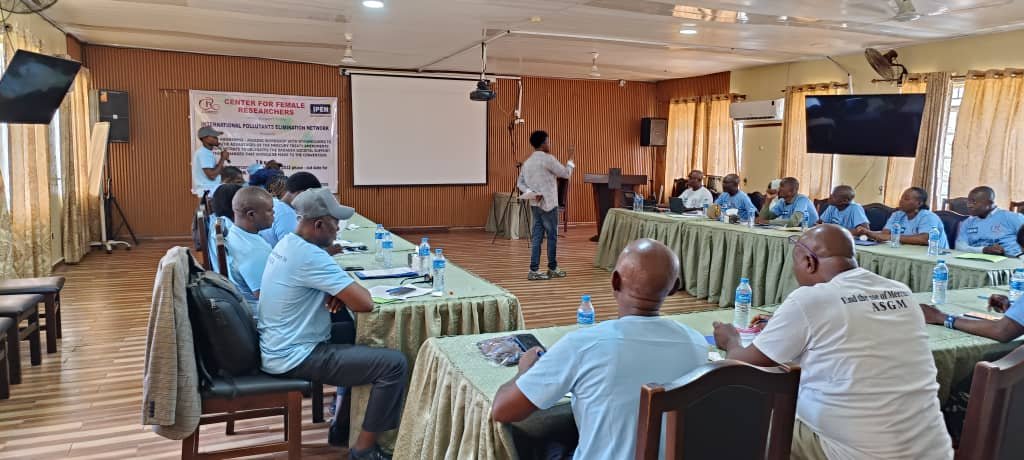
The Center for Female Researchers (CFR), with support from the International Pollutants Elimination Network (IPEN), has concluded a one-day awareness-raising workshop, bringing together key stakeholders to discuss proposed amendments to the Minamata Convention on Mercury and push for an end to global mercury trade as well as a 2032 phase-out date for its use in Artisanal and Small-Scale Gold Mining (ASGM).
Speaking at the event, CFR Executive Director, Madam Binta Bah, said the engagement was aimed at examining how Sierra Leone can contribute to protecting human health and the environment by addressing key gaps in the Convention, which the country signed in August 2014 and ratified in November 2016. She noted that despite global commitments, the treaty still allows ongoing international mercury trade and does not set a clear deadline for ending its use in ASGM.
According to her, these loopholes have enabled significant quantities of mercury to be diverted into small-scale mining, where it is released into the environment, contaminating water sources and entering the food chain, with serious consequences for public health, particularly among vulnerable groups.
Madam Bah expressed concern over global trends, revealing that mercury trade has increased from about 1,200 tonnes in 2017 to 1,700 tonnes in 2022, representing a 40 percent rise. She explained that while earlier reductions were driven by declining industrial demand, the steady rise in gold prices has made ASGM the leading driver of mercury consumption worldwide. Data, she added, shows that mercury use in ASGM has remained largely unchanged, reinforcing the need for urgent reforms.
She therefore called for decisive action, including ending mercury trade except for environmentally sound disposal and establishing a clear 2032 deadline for phasing out its use in small-scale mining.
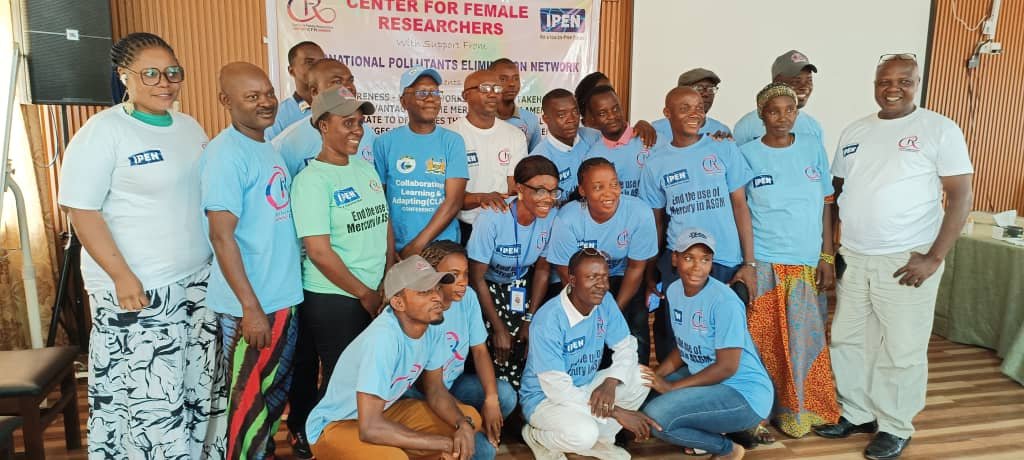
Also addressing participants, Environmental Protection Agency representative Mobash Idriss provided insight into the dangers of mercury, describing it as a toxic, silver-coloured metal that remains liquid at room temperature and poses serious risks to both human health and the environment. He noted that the World Health Organization classifies mercury among the top ten chemicals of major public health concern, with exposure linked to severe conditions such as Minamata disease.
He explained that mercury can exist in different forms, including methylmercury, which is more toxic and easily enters the food chain. Exposure, he said, can lead to nervous system damage, affecting concentration, coordination and movement, as well as causing kidney complications. He warned that pregnant women are particularly at risk, as mercury can affect the developing brain of unborn children.
Idriss further stated that ASGM remains the largest source of mercury emissions globally, contributing about 35 percent, and up to 70–80 percent in Sub-Saharan Africa. He highlighted Sierra Leone’s efforts under the Minamata Convention on Mercury, including the completion of a Mercury Initial Assessment in 2019 and the development of a National Action Plan in 2020 aimed at reducing and eventually eliminating mercury use in the sector.
He pointed to ongoing initiatives such as pilot projects introducing mercury-free technologies and the GOLD+ Project, which seeks to support miners in transitioning to safer practices while improving access to finance and strengthening regulatory frameworks.
The EPA representative also stressed the need for stronger policy enforcement, improved coordination among institutions, and increased investment in capacity building and monitoring systems to effectively control mercury use and trade.
Civil society representative Ahmed K. Mansaray highlighted challenges within mining communities, noting that many miners continue to rely on mercury due to tradition and limited exposure to alternative methods. He said resistance to change remains a major obstacle but emphasized that safer options such as gravity concentration and the borax method are practical and effective if properly introduced.
Participants at the workshop called for greater collaboration among government, civil society, and the private sector to strengthen policies, raise awareness, and support miners in adopting safer technologies.
The workshop ended with a renewed call for Sierra Leone to support global efforts to amend the mercury treaty, with stakeholders stressing that addressing mercury pollution is critical to protecting public health, preserving the environment, and ensuring sustainable national development.