By: Hope Times News Desk
In a decisive shift from paperwork oversight to boots-on-the-ground supervision, Sierra Leone’s public procurement watchdog is redefining how government projects are tracked, assessed, and delivered. The National Public Procurement Authority (NPPA) is moving beyond the traditional role of contract approvals into a more assertive phase ensuring that what is signed on paper is actually executed to standard on site.
At the center of this transformation is NPPA’s renewed focus on contract monitoring, a move widely seen as a response to years of concerns over substandard infrastructure, delayed delivery, and weak accountability in public sector projects. Under the leadership of Chief Executive Officer Fodie J. Konneh, the Authority has established a dedicated Engineering Directorate to strengthen technical supervision, particularly in high-value infrastructure investments.
This structural reform reflects a growing recognition that procurement efficiency does not end at contract award. Instead, it extends into the life cycle of project implementation where quality assurance, adherence to specifications, and cost control ultimately determine whether public funds translate into tangible national development.
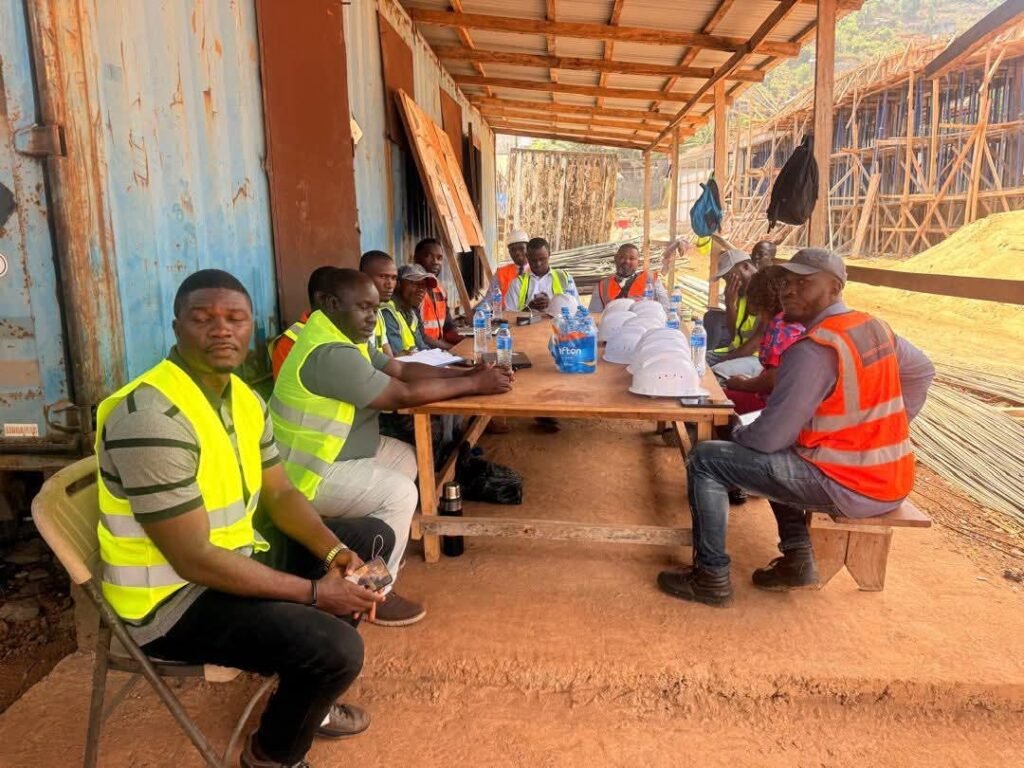
The Directorate’s latest intervention saw a team of engineers embark on monitoring visits to two key health infrastructure projects in Lakka and Jui, both within the Western Area Rural District. The inspections signal NPPA’s intent to institutionalize routine technical audits as part of its oversight framework.
In Lakka, the team assessed the ongoing construction of a postgraduate training facility designed to support advanced studies in administration and pedagogy within the health sector. The project, implemented through the Ministry of Health and backed by development partners under the Sexual and Reproductive Health and Rights programme, is expected to strengthen specialized medical training in the country. While progress was described as satisfactory, inspectors emphasized the importance of maintaining strict compliance with engineering standards and timelines.
A day later in Jui, attention shifted to the proposed Faculty of Basic Medical Sciences building at the College of Medicine and Allied Health Sciences, University of Sierra Leone. The facility, once completed, is expected to significantly boost teaching and research capacity. NPPA engineers conducted a detailed review of construction quality, material standards, and contractor performance, while also engaging project stakeholders to address operational bottlenecks.
Speaking during the engagements, Deputy Director of Engineering Henry Minah highlighted the growing importance of technical oversight in safeguarding public investments. He noted that consistent monitoring not only enforces compliance but also helps prevent costly setbacks such as delays, inflated budgets, and compromised construction standards.
The broader implication of NPPA’s transition is a shift in public sector accountability. By embedding engineers directly into the monitoring process, the Authority is positioning itself as an active enforcer of quality, rather than a passive regulator confined to procurement procedures.
Analysts view this approach as timely, particularly in a context where infrastructure spending constitutes a significant portion of national expenditure. Without rigorous monitoring, such investments risk underperformance or outright failure an outcome the NPPA now appears determined to prevent.
As both projects progress toward completion, expectations are high that the new oversight model will deliver measurable improvements not only in infrastructure quality but also in public confidence. For a country striving to strengthen its healthcare system and human capital, the stakes could hardly be higher.
With sustained monitoring, stakeholder collaboration, and technical diligence, the NPPA’s evolving role may well redefine the standards of public project delivery in Sierra Leone turning policy ambition into practical results on the ground.