In a significant milestone for public health, the Ministry of Water Resources and Sanitation (MoWRS), in collaboration with UNICEF Sierra Leone, officially declared five chiefdoms Open Defecation Free (ODF) on Wednesday. The declaration ceremony, held at the Kambia District Hall to mark World Toilet Day 2025, was themed “Sanitation in a Changing World.”The newly certified chiefdoms are Kongboro, Nongoba, Makpele, Imperi, and Malen.
In his welcome address, Chief JoeanisBrima, representing the Paramount Chief of Kaiyamba Chiefdom, underscored the critical importance of good sanitation. He highlighted the ongoing challenge of open defecation and houses without toilets, calling for the adaptation of good innovations to bridge the gap.
Officially declaring the chiefdoms ODF, the Minister of Water Resources and Sanitation, Madam Patricia Marcathy, commended development partners, especially UNICEF, for their sustained contributions to the country’s Water, Sanitation, and Hygiene (WASH) sector. She specifically recognized Living Water for its vital role.
Minister Marcathy revealed that the creation of a standalone Ministry of Water Resources is a manifestation of the government’s strong political will to address the issue. She outlined the ministry’s strategic plan, which guides its work collaboratively, and stated that the ministry is actively exploring innovative ways to improve services and ensure sustainability. Failure to provide proper sanitation, she warned, has severe negative effects on public health.
UNICEF Deputy Representative, Alpha Cisse, described the event as a historic achievement. He noted that the five chiefdoms now join a growing list of 21 ODF chiefdoms across five districts, with nine more on the brink of certification.
“By ending the practice of open defecation, they protect themselves from preventable diseases such as cholera and diarrhoea, which remain leading contributors to child mortality in Sierra Leone,” Mr. Cisse stated.
He elaborated on this year’s World Toilet Day theme, emphasizing that a “safe toilet” is a facility that manages human waste responsibly, safeguarding health, upholding dignity, and protecting the environment. The absence of such facilities, he cautioned, puts individuals particularly children, women, and the elderly at serious risk and reinforces inequality.
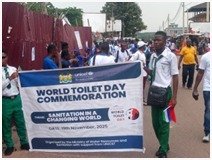
Representing the Ministry’s permanent staff, Deputy Secretary Komba emphasized that access to sanitation is a basic human right, not a privilege, and reaffirmed the government’s commitment to providing safe toilets. He called for a change in systems and approaches at both the district and institutional levels to ensure sanitation solutions are adaptable and resilient.
The Country Director for Living Water, Mrs. Rosemarie Yeama Blake, expressed satisfaction with the celebration, noting that the day was about forging partnerships and ensuring sustainability, not just raising awareness. The event also featured a dramatic performance by school children illustrating the importance of safe toilet facilities.
In a related development, a UNICEF team alongside independent journalists conducted a field visit to several of the newly declared Open Defecation Free communities.