By: Hope Times Staff Writer
The Human Rights Commission of Sierra Leone (HRCSL) has officially launched a video documentary and a comprehensive report highlighting the human rights implications of Kush, a dangerous synthetic drug that has emerged as a major public health and national security concern in Sierra Leone.
The launch took place on 20th January 2026 at the conference room of the Electoral Commission for Sierra Leone (ECSL) and brought together representatives from key government institutions and stakeholders, including the National Drug Law Enforcement Agency (NDLEA), the Ministry of Health, the Sierra Leone Correctional Service, the Ministry of Gender and Children’s Affairs, the Republic of Sierra Leone Armed Forces, civil society organisations, and members of the media.
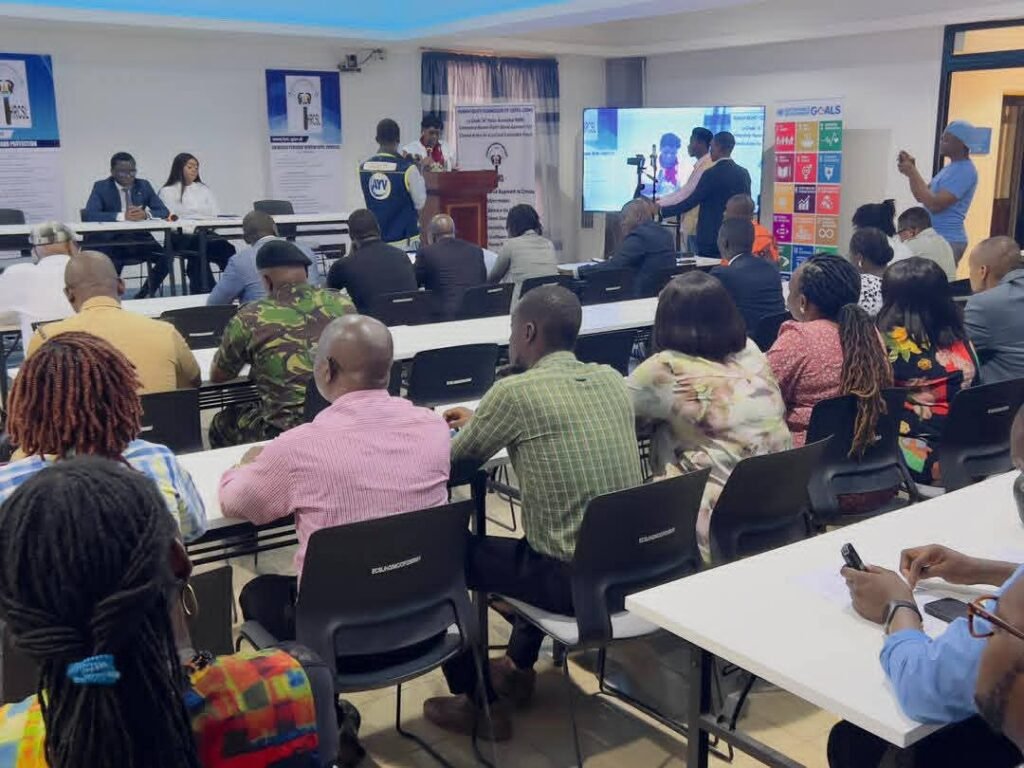
The documentary and report present compelling accounts of the lived experiences of Kush users and their families, alongside perspectives from health workers, law enforcement officers, and other frontline responders. The materials examine how current responses to Kush intersect with fundamental human rights, particularly the rights to health, dignity, due process, and freedom from cruel, inhuman, or degrading treatment.
Presenting the key findings and recommendations of the report, the Director of Education, Communication and Training at HRCSL, Richard Tamba M’Bayo, called on the government to take urgent and decisive action to eradicate Kush and other synthetic drugs in the country. He emphasized the need for coordinated national strategies that prioritise prevention, treatment, and respect for human rights.
Speaking on behalf of the Commission, the Vice Chairperson of HRCSL, Victor Idrissa Lansana Esq., described Kush as a grave menace threatening the lives and future of Sierra Leone’s young population. He noted that many young people have lost their lives to the drug, while others are currently undergoing rehabilitation due to Kush addiction.
“The documentary clearly shows that our young people are being abused. The impact of Kush is quite telling, which is why we want the government and the public to understand that this fight must be approached from a human rights perspective,” Lansana stated, urging all Sierra Leoneans to unite against the spread and abuse of the drug.
Delivering the keynote address, the Deputy Minister of Justice, Madam Saptieu Saccoh, said the findings of the report demonstrate that Kush abuse is deeply rooted in broader social challenges, including poverty, unemployment, trauma, social exclusion, and limited access to mental health and rehabilitation services.
“Kush has been linked to serious physical and mental harm, and in some cases, premature deaths. It continues to destroy the productive potential of a generation that should be central to Sierra Leone’s development,” she said. Madam Saccoh further noted that the right to human dignity is undermined when users are subjected to degrading treatment, abandonment, or excessive criminalisation.
While commending HRCSL for documenting the human rights dimensions of Kush, the Deputy Minister reaffirmed the Ministry of Justice’s commitment to working with relevant institutions to strengthen human rights complaints mechanisms and support evidence-based policy and legislative reforms.
Several institutions present at the event expressed their willingness to collaborate with HRCSL on awareness raising, public engagement, and joint interventions aimed at addressing Kush through prevention, rehabilitation, and human rights–centred approaches.