By: Isatu Bai Kamara
A major reform initiative aimed at reshaping how Sierra Leone trains and develops its public servants gained momentum this week, as two key government ministries opened formal engagements to redefine the future of the Civil Service Training College (CSTC).
On 21st January 2026, the Ministry of Technical and Higher Education (MTHE) and the Ministry of Public Administration and Political Affairs (MoPAPA) convened a high-level technical meeting to begin discussions on transforming the CSTC into a Public Service Academy a move officials say is central to strengthening professionalism, skills development, and performance across the country’s public service.
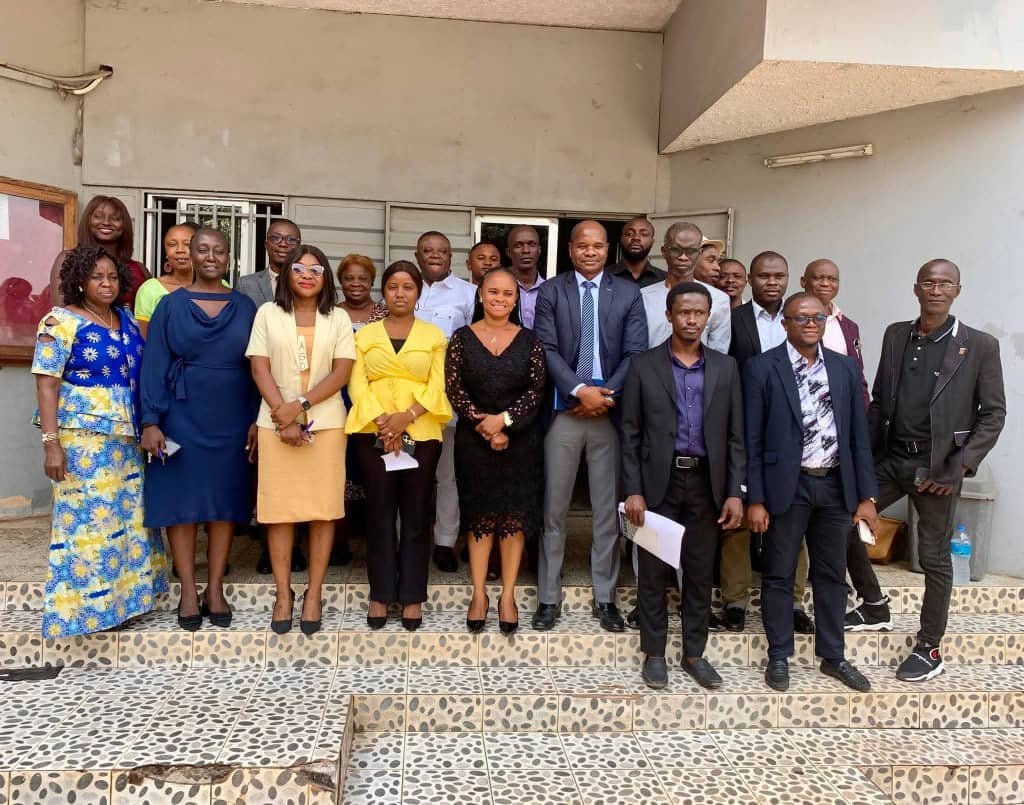
The meeting, chaired by Mohamed Sheick Kargbo, Permanent Secretary at MTHE, brought together senior officials from both ministries, policy and technical experts, and representatives from the African Institute of Economic Development and Planning (IDEP), which is providing technical support to the reform process.
Opening the technical discussions, Josephus Brimah, Chief Technical and Higher Education Officer at MTHE, made it clear that the proposed reform must go beyond a change of name. He stressed that the envisioned Public Service Academy should be driven by purpose, outcomes, and relevance to the real needs of the public sector.
According to Dr. Brimah, the academy must serve as a hub for continuous professional development, reorientation, and upskilling catering not only for new entrants into the public service but also for serving officers at various stages of their careers. He emphasized that training programmes should be practical, demand-driven, and closely aligned with the operational realities of ministries, departments, and agencies.
He further underscored the importance of broad-based consultations in designing curricula and programmes, noting that retired and experienced civil servants possess invaluable institutional knowledge that could help ensure training remains “fit for purpose.” Dr. Brimah also highlighted the need for all programmes to align with Sierra Leone’s National Qualifications Framework and to be accredited by the appropriate statutory bodies, whether under academic or technical and vocational education pathways. Strong pedagogical skills among trainers, he said, would be critical to the success of the proposed academy.
From a technical and vocational education perspective, Abdul Senesie, Director of Technical and Vocational Education and Training (TVET) at MTHE, described the transition as a complex and far-reaching reform. He noted that while the CSTC has historically focused on training civil service cadets, expanding its mandate into a full-fledged public service academy raises fundamental questions around accreditation, certification, and institutional positioning.
Mr. Senesie cautioned that the academy would need to be carefully situated within Sierra Leone’s evolving education and training architecture, including academic pathways, TVET, and emerging micro-credential systems. He called for extensive stakeholder engagement to ensure coherence with national education policies and to avoid duplication or fragmentation of training efforts.
Human resource challenges within the public service also featured prominently in the discussions. Rebecca Saffa, Director of Human Resource at MTHE, pointed to longstanding issues surrounding training coordination, funding, and sustainability. She raised concerns about how the academy would be financed over the long term and encouraged exploration of innovative funding models.
Ms. Saffa suggested that digital and blended learning platforms could help make training more accessible and flexible, particularly for adult learners already in service. She also emphasized the importance of linking the academy’s programmes to existing training needs assessments across ministries, noting that many public servants face stalled career progression due to limited access to accredited qualifications.
Adding another dimension to the debate, Fatmata Kaiwa, Director of Science Education at MTHE, questioned whether establishing a broad public service academy could place additional strain on government finances, especially given fiscal constraints and the number of publicly funded institutions already in operation. She suggested that some specialised training needs might be better addressed through integration with existing institutions, rather than creating parallel structures.
Responding on behalf of MoPAPA, Momoh Conteh, Director of Public Administration, explained that the initiative is firmly rooted in national policy and aligns with the President’s broader reform agenda to modernize Sierra Leone’s public service architecture by 2030.
Mr. Conteh noted that the current phase of the process focuses on a comprehensive management and functional review of the CSTC, which will produce a detailed roadmap for its transition into a Public Service Academy. He clarified that the reform is intended to replace and expand the CSTC, rather than establish an entirely new institution, describing the shift primarily as one of mandate, scope, and strategic focus.
Addressing concerns about infrastructure, Mr. Conteh disclosed that land has already been identified at Six Mile to host the proposed academy, responding to longstanding concerns about the limitations of the current CSTC location. He added that specialised training institutions such as a foreign service academy would operate as subsets within the broader public service academy framework.
He further explained that the academy is expected to play a central role in career development and progression within the public service. Completion of certain courses, he said, could become a requirement for performance appraisal and promotion, drawing on best practices from countries such as Kenya.
From the development partner’s perspective, Bakary Dosso, Director of Training and Research at IDEP, emphasized the importance of close collaboration with MTHE, given its oversight role in accreditation, curricula development, and human capital planning. He noted that the transition would require careful attention to accreditation standards, digital transformation, and long-term financial sustainability.
IDEP Training Officer Mamadou Cisse echoed concerns about sustainability, cautioning against heavy reliance on donor funding. He urged the government to prioritize domestic financing mechanisms to ensure the academy’s long-term viability. He added that feedback from ministries and stakeholders would feed into the validation of the draft management and functional review, which is scheduled to take place at the CSTC.
At the close of the engagement, officials from both MTHE and MoPAPA agreed on the need for continued, inclusive dialogue as the reform process advances. They reaffirmed their shared commitment to building a modern, efficient, and professional public service, underpinned by a training institution capable of responding to the evolving demands of governance and national development.