By: Hope Times News Desk
The Ministry of Finance has reaffirmed the Government of Sierra Leone’s commitment to protecting investments in children and persons with disabilities through improved budgeting, accountability, and stronger partnerships, following the validation of key social sector budget briefs developed with support from UNICEF.
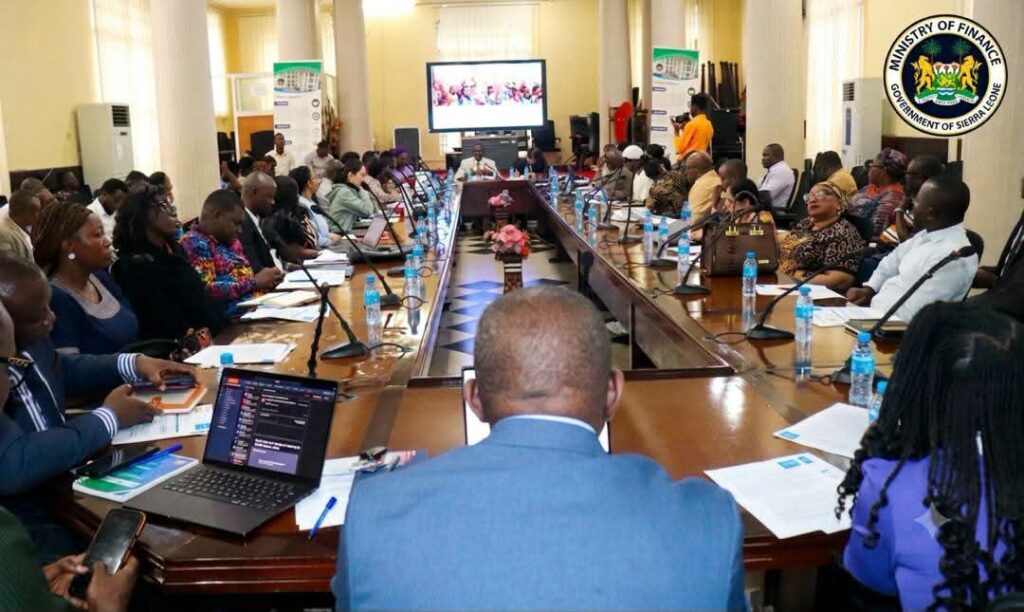
The validation workshop, held on Thursday, July 23, 2026, at the Ministry’s Conference Hall on George Street in Freetown, brought together senior government officials, development partners, and technical experts to review budget allocations and expenditure trends affecting some of the country’s most vulnerable populations. The exercise aimed to ensure that public resources are allocated and utilized effectively to improve essential social services while strengthening transparency and evidence-based decision-making.
Chairing the session, the Deputy Director of Budget at the Ministry of Finance, Dr. Ilara Mahdi, described the validation exercise as a significant milestone in the government’s ongoing efforts to improve public financial management and social sector investment. She emphasized that strategic investments in nutrition, healthcare, education, and Water, Sanitation, and Hygiene (WASH) remain fundamental to safeguarding the well-being and future development of children and persons with disabilities.
Dr. Mahdi noted that effective budgeting is not merely about allocating funds but ensuring that those resources translate into measurable improvements in people’s lives. According to her, stronger planning and efficient implementation are essential to delivering quality public services and achieving national development goals.
UNICEF Representative to Sierra Leone, Mariko Kagoshima, commended the Government for maintaining macroeconomic stability despite persistent global economic challenges. She acknowledged efforts to reduce fiscal deficits, strengthen domestic revenue generation, and preserve critical social sector spending even amid rising international fuel prices and inflationary pressures.
She observed that while the country continues to face financial constraints, including high debt servicing obligations that consume a substantial portion of national revenue, government efforts to sustain investments in children deserve recognition.
Kagoshima stressed that sustained financing remains crucial for life-saving programmes, including routine immunization, nutrition services, school WASH facilities, social protection initiatives, and effective school management systems. She encouraged authorities to ensure that approved budget allocations are released on time and spent transparently in accordance with planned priorities.
She further noted that protecting investments in children is not only a social responsibility but also a long-term economic strategy capable of producing healthier, better educated, and more productive citizens who will contribute meaningfully to Sierra Leone’s future growth.
Delivering the keynote address, Financial Secretary Matthew Dingie expressed appreciation to UNICEF for its continued technical and financial support in developing the budget briefs. He described the documents as important planning tools that will guide future government policies and programmes aimed at improving children’s welfare.
Mr. Dingie disclosed that preparations for the 2027 National Budget are already underway, with government institutions placing greater emphasis on collecting accurate child-related data and statistics, including school attendance and education indicators, to improve evidence-based planning and budgeting.
He assured stakeholders that recommendations emerging from the validated budget briefs would not remain on paper but would be carefully reviewed and gradually incorporated into government planning under the Medium-Term Budget Framework.
According to the Financial Secretary, approximately 2.2 percent of programme budget allocations across Ministries, Departments, and Agencies currently support child-focused interventions. These include flagship initiatives such as the Free Quality School Education programme, student transportation support, and other social protection measures designed to improve access to education and essential public services.
Mr. Dingie also highlighted the importance of Sierra Leone’s programme with the International Monetary Fund under the Extended Credit Facility, explaining that social spending remains one of the programme’s key performance benchmarks. He said government budget implementation is assessed twice annually to ensure public expenditure remains responsive to both national priorities and global economic shocks, including volatile fuel prices.
Participants later received a comprehensive presentation outlining the findings of the social sector budget briefs. The presentation examined expenditure patterns, financing gaps, and opportunities for improving efficiency in sectors directly affecting children and persons with disabilities.
The technical session was followed by an interactive discussion during which representatives from government institutions, development partners, and civil society organizations raised questions, provided recommendations, and discussed practical strategies for strengthening budget implementation and monitoring.
The validation workshop concluded with renewed commitments from both the Ministry of Finance and UNICEF to deepen collaboration in finalizing the budget briefs and implementing their recommendations. Stakeholders agreed that stronger coordination, improved financial accountability, and sustained investment in social services remain essential to achieving better outcomes for children and persons with disabilities across Sierra Leone.
The Ministry of Finance maintained that strengthening social sector financing will continue to be a national priority as the government works toward building a more inclusive, resilient, and equitable society where every child and vulnerable citizen has access to quality education, healthcare, nutrition, social protection, and other essential public services.