As artificial intelligence (AI) continues to accelerate changes in the global media landscape, the role of journalists in maintaining accuracy and credibility has become important. While technological advancements have increased the speed of news production, experts emphasize thatcompetitiveness no longer depends on possessing AI tools themselves, but rather on how effectively and responsibly they are utilized.
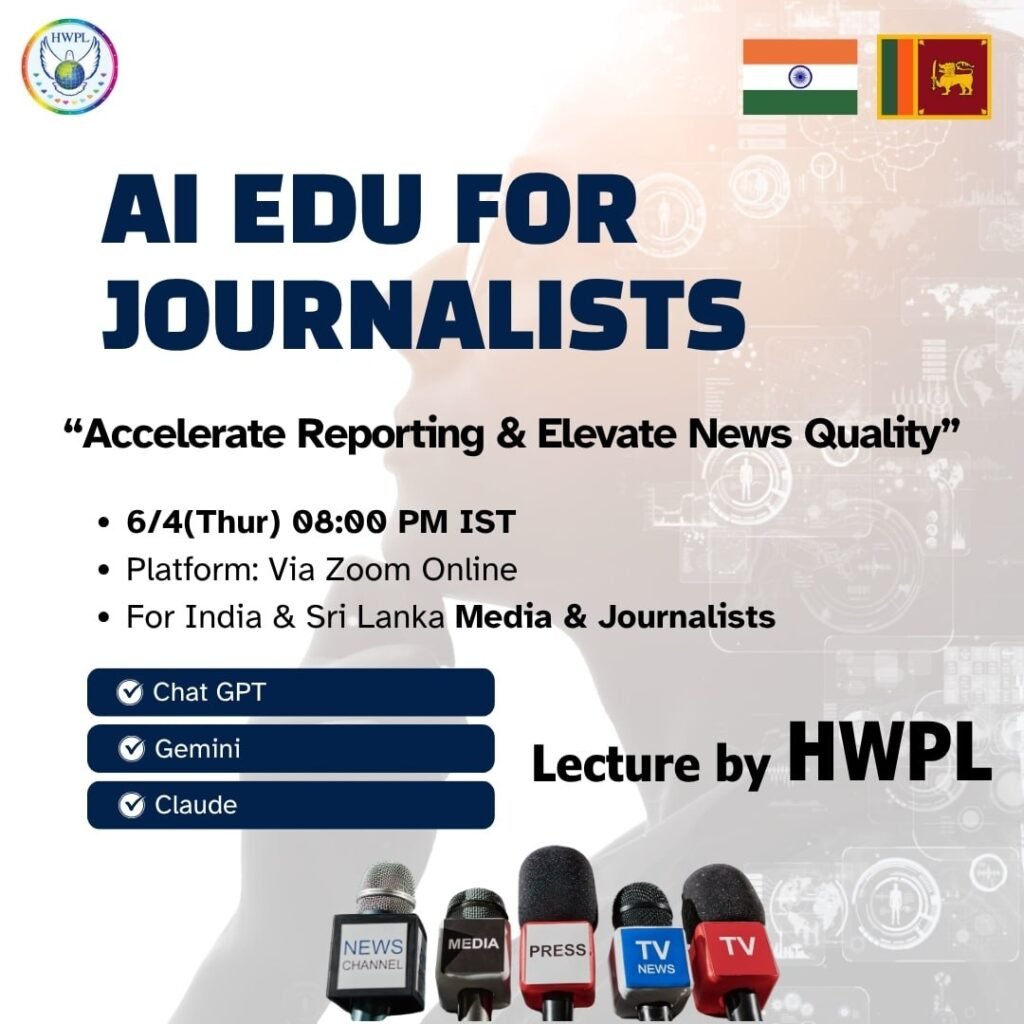
Against this backdrop, Heavenly Culture, World Peace, Restoration of Light (HWPL) conducted an online AI journalism training session via Zoom on June 4 for journalists from India and Sri Lanka.
The training was organized as part of HWPL’s media program and was attended by 18 journalists and media professionals from both countries. The session focused on the changing media environment in the AI era, the evolving role of journalists, and practical approaches to the responsible use of AI in newsrooms.
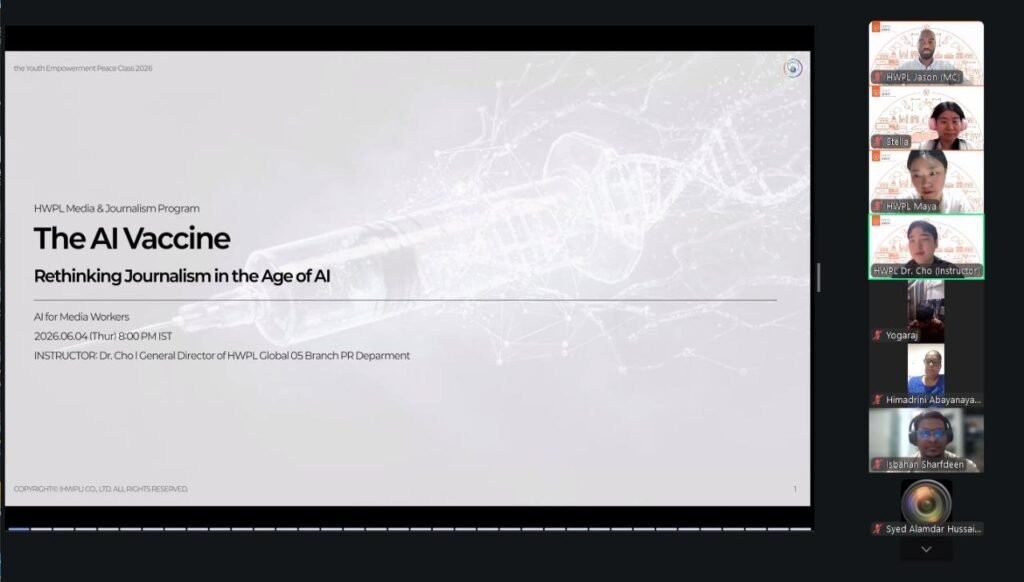
India and Sri Lanka growth in digital media and mobile-based news consumption. At the same time, the multilingual nature of these societies and the fast pace of information dissemination have heightened the importance of journalists’ fact-checking capabilities and their responsibility to maintain public trust.
Accordingly, the program not only introducednew technologies but also explored how journalists can uphold professionalism and public responsibility amid a transforming media landscape.
During the session, participants learned about the features and practical applications of major AI platforms, including ChatGPT and Gemini.
The attendees explored the characteristics and differences of these tools and engaged in discussions on how AI can be used responsibly in today’s evolving media environment. Particular attention was given to ways in which journalists can enhance productivity throughout the reporting process while preserving the core values of journalism accuracy, fairness, and credibility.
Dr. Cho, who led the training, commented on the role of journalists in the AI era, stating, “AI can process vast amounts of information and dramatically improve work efficiency. However, it cannot determine what is true or what serves the public interest.”
He further emphasized, “Journalists should invest the time saved through AI in the most human aspects of their profession building trust with sources and exercising deeper editorial judgment.”
The training also highlighted the perspective that AI is not a substitute for journalists but rather a tool that expands their capabilities. While AI can rapidly organize and analyze information, the final responsibility for editorial decisions, fact-checking, and social accountability remains firmly in the hands of human journalists.
In addition, the program addressed the growing importance of combating misinformation and establishing ethical standards as the use of AI becomes more widespread. Participants discussed the need for transparency when using AI-generated content and the importance of maintaining multiple layers of verification and rigorous fact-checking procedures in the reporting process.
Beyond its educational value, the event also served as a platform for international exchange, allowing journalists from different countries to discuss shared challenges and exchange experiences in adapting to the changing media landscape.
HWPL stated that it plans to continue strengthening networks among participating journalists and expand follow-up programs, including the sharing of AI application case studies and advanced training opportunities.
Dr. Cho concluded, “In the age of AI, what truly matters is not how quickly we adopt new technologies, but how responsibly we use them. I hope this training will help journalists in India and Sri Lanka maintain trust and professionalism as they navigate the evolving media environment.”