By: Yusuf Ibrahim Kamara (The Wise Thinker)
The Ministry of Water Resources and Sanitation has intensified efforts to improve coordination and public engagement under the World Bank-supported Sierra Leone WASH Access Improvement Project by advancing the development of a comprehensive Strategic Communications Plan in collaboration with key implementing institutions.
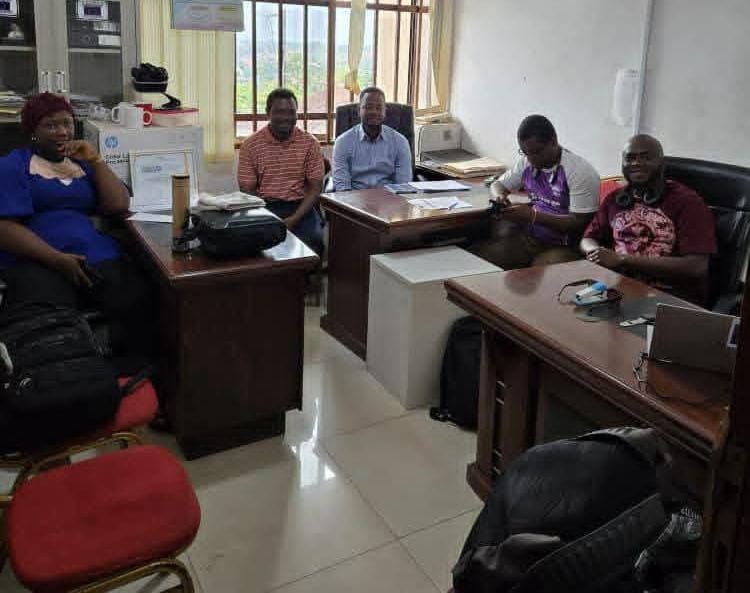
The latest round of consultative engagements, spearheaded by the Ministry’s Communications Unit and the project’s communications team, brought together communication specialists and technical representatives from the Sierra Leone Water Company (SALWACO), Guma Valley Water Company, Sierra Leone Electricity and Water Regulatory Commission, National Water Resources Management Agency, Freetown City Council, and the Western Area Rural District Council.
The consultations focused on reviewing progress made in drafting the Strategic Communications Plan while allowing partner institutions to provide technical input that will ensure the final document reflects their operational priorities, communication responsibilities, and institutional mandates.
Addressing participants, Communications Specialist for the Sierra Leone WASH Access Improvement Project, Mr. Tanu Jalloh, explained that the strategy is intended to establish a coordinated communication framework that will guide all implementing agencies throughout the lifespan of the project.
He clarified that the Strategic Communications Plan is specifically designed for project implementation and is not intended to replace existing institutional communication policies or strategies. Instead, it will complement them by promoting consistency in project messaging, public engagement, branding, and stakeholder communication.
Mr. Jalloh noted that the communications strategy has been developed in line with both World Bank communication standards and national policy objectives to strengthen transparency, accountability, and public awareness throughout project implementation.
He further explained that the framework extends beyond conventional media engagement by incorporating stakeholder participation, community outreach, grievance redress mechanisms, digital communication, information management systems, monitoring and evaluation, communication risk management, and institutional capacity development.
According to him, the strategy also mainstreams gender equality, youth participation, disability inclusion, and support for vulnerable communities to ensure that communication activities remain inclusive and responsive to the diverse needs of beneficiaries.
Providing an update on the drafting process, Mr. Jalloh disclosed that the Strategic Communications Plan is approximately 85 to 90 percent complete and will soon be circulated among implementing agencies for further review before a national validation workshop.
He encouraged participating institutions to carefully examine the draft document and provide recommendations to ensure that their communication priorities, responsibilities, and operational realities are adequately reflected before finalization.
Meanwhile, Assistant Director for WASH Information Management at the Ministry of Water Resources and Sanitation, Mr. Patrick Amara Ngaojia, announced that the project will soon undertake communication capacity assessments across all implementing agencies.
He said the assessment will identify institutional strengths, communication gaps, staffing requirements, equipment needs, digital platforms, software, logistics, and other resources necessary to strengthen communication performance across the sector.
Mr. Ngaojia also revealed that the Ministry plans to organize specialized media relations and executive communication training for senior management and Information, Education and Communication officers to improve public engagement and institutional communication.
Mr. Jalloh further emphasized the importance of harmonizing communication efforts through the Water, Sanitation and Hygiene Information Centre, standardized reporting systems, coordinated messaging, and shared digital platforms that will effectively showcase project achievements while satisfying World Bank visibility requirements.
Also contributing to the discussions, Mr. Ngaojia stressed that communication professionals should be involved from the earliest stages of project implementation, noting that early communication planning enhances public awareness, improves documentation of milestones, and encourages broader stakeholder participation.
Although implementation is currently concentrated in the Western Area, he explained that the communications framework is being designed as a national model capable of supporting future expansion of the WASH Access Improvement Project across Sierra Leone.
Representatives from the implementing agencies welcomed the collaborative process and reaffirmed their commitment to supporting the successful completion and implementation of the Strategic Communications Plan.
Speaking on behalf of SALWACO, Planning Manager Ms. Chrisla Koroma stated that the company’s own Strategic Communications Plan and institutional communication systems would complement the project strategy and help ensure that SALWACO’s priorities are fully incorporated into the final document.
Officials from Guma Valley Water Company and the National Water Resources Management Agency also pledged to review the draft alongside the Project Appraisal Document to ensure effective alignment with their respective implementation responsibilities.
Communications officers and District Planning Officers from the Freetown City Council and the Western Area Rural District Council called for closer collaboration between planning and communication teams to improve reporting, information sharing, project coordination, and stakeholder engagement.
They further appealed for greater investment in logistics, communication equipment, digital tools, and other resources needed by Information, Education and Communication officers to effectively carry out public awareness and community engagement activities.
Responding to the recommendations, Mr. Jalloh assured stakeholders that consultations would continue throughout the drafting and validation stages to ensure the strategy remains practical, inclusive, and responsive to the needs of all implementing institutions.
He further confirmed that District Planning Officers will be fully integrated into the project’s communication structures and emphasized that the communication systems established under the initiative are intended to remain operational and sustainable long after the project concludes.
The consultations concluded with a renewed commitment by the Ministry of Water Resources and Sanitation and its implementing partners to strengthen collaboration, transparency, information sharing, and stakeholder participation through a unified Strategic Communications Plan that will enhance the visibility, accountability, and long-term success of the World Bank-supported Sierra Leone WASH Access Improvement Project.